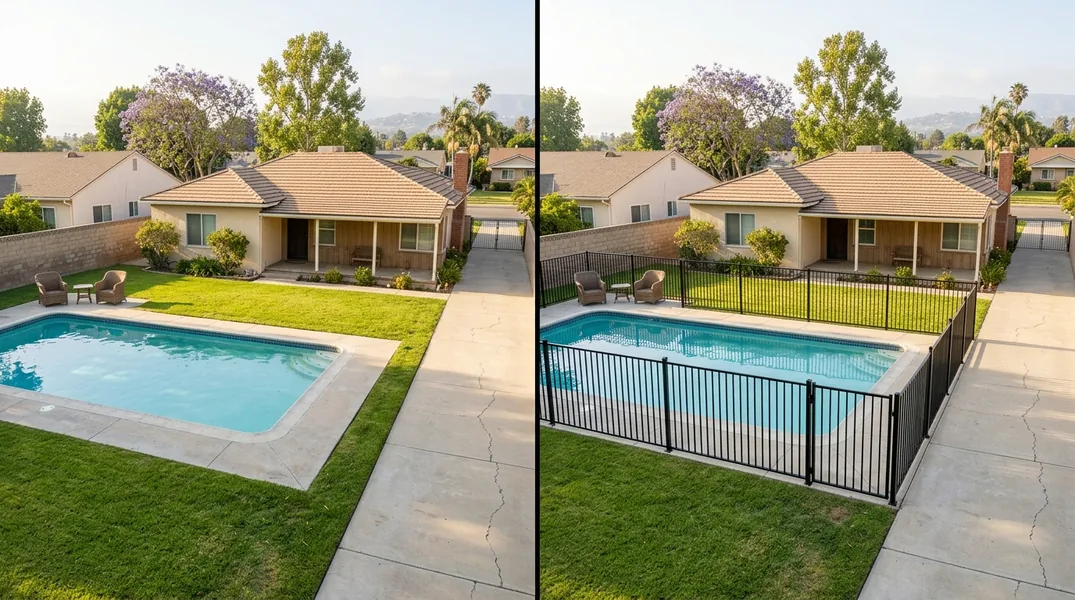
Understanding California Pool Fence Code Requirements
If you own a swimming pool in Anaheim, California state law requires you to install a barrier fence around it. This isn't optional, and it's not just a suggestion from your homeowners association. California's pool safety regulations exist to prevent accidental drownings, particularly among young children. The state follows the guidelines outlined in the California Building Code, which incorporates national standards for residential pool enclosures.
The primary purpose of these requirements is to create a complete barrier that restricts unsupervised access to the pool. This means your fence must fully enclose the pool area, with no gaps or openings that a small child could squeeze through. Whether you're planning new Wood & Privacy Fence Installation or upgrading an existing barrier, understanding these codes is essential before you begin any project. Non-compliance can result in fines, liability issues, and most importantly, increased risk to children and pets.
Pool Fence Height Requirements: What You Need to Know
California requires that pool barriers be at least four feet high, measured from the ground level on the pool side of the fence. This height requirement is consistent across residential properties throughout the state, including Anaheim. The four-foot minimum ensures that children cannot easily climb over or reach into the pool area. If your yard slopes, the measurement must be taken from the lowest point of the ground on the pool side, which means your fence may need to be taller in some sections to maintain compliance.
Beyond the basic height requirement, the fence must also be constructed so that it cannot be easily climbed. This means avoiding horizontal rails or handholds that could serve as steps. Vertical slats or boards are preferred because they don't provide the same climbing advantages. If you're considering Vinyl & PVC Fence Installation or Chain Link Fence Installation, both can meet these height and climbability requirements when installed correctly. The spacing between vertical elements must also be tight enough that a four-inch sphere cannot pass through, preventing small children from squeezing between boards or links.
Self-Closing Pool Gate Requirements and Installation Standards
One of the most critical components of a compliant pool fence is the self-closing pool gate. California code requires that any gate providing access to the pool area must be self-closing and self-latching. This means the gate should automatically swing shut after someone passes through, and it must have a latch that automatically engages without requiring manual action. The self-closing mechanism should work regardless of the angle at which the gate is left, ensuring that even if someone forgets to close it completely, it will swing shut on its own.
The self-latching mechanism must be positioned at least 54 inches above the ground level, which places it out of reach for most young children. This height requirement prevents kids from being able to operate the latch themselves. Additionally, the gate must open away from the pool, meaning it swings outward rather than into the pool area. This directional requirement adds another layer of safety by making it more difficult for children to push through. The gate hinges and frame must be sturdy enough to withstand repeated use and weather exposure, and the closing mechanism should be tested regularly to ensure it functions properly. If you're installing a new pool fence, working with experienced professionals who understand these specific requirements is crucial to ensuring your gate meets all code standards.
Additional Pool Barrier Requirements Beyond the Fence
While a perimeter fence is the primary barrier, California code recognizes that multiple layers of protection are more effective. Many properties incorporate additional safety measures alongside the fence. These might include pool alarms, covers, or rescue equipment positioned nearby. Some homeowners add a removable mesh fence as a secondary barrier, or install additional gates at other access points. However, these supplementary measures do not replace the need for a compliant perimeter fence. Your main Wood & Privacy Fence Installation or alternative fencing solution must still meet all height, spacing, and gate requirements.
If your property has multiple access points to the pool area, each one must have a compliant self-closing, self-latching gate. This includes side yard gates, back patio doors, or any other opening that could provide access. Some properties use Aluminum & Ornamental Iron Fencing for their pool enclosure because it provides good visibility while maintaining the required structural integrity. The key is ensuring that every entry point is secured with appropriate gates and latching hardware. Local code enforcement officers will inspect these details, so it's important to get them right from the start.
Working With Local Anaheim Inspectors: What to Expect
Before you install a pool fence in Anaheim, it's wise to check with your local building department about any additional local requirements that might exceed state minimums. While California sets the baseline standards, some cities or counties may have stricter rules. You may need to obtain a permit before installation begins, and an inspector will likely need to verify that your finished fence meets all requirements. This inspection process protects you by ensuring your installation is compliant and gives you documentation that your pool area meets safety standards.
When you contact Anaheim Fence for your pool fencing project, our team is familiar with local code requirements and can guide you through the process. We recommend getting a free estimate and discussing your specific situation with our professionals. They can answer questions about measurements, gate specifications, and material choices that will help you stay compliant. You can reach us at (657) 207-8168 to discuss your pool fence needs and get started on a project that protects your family while meeting all California requirements.
Pool Fence Installation Cost in Anaheim: What to Budget
The cost of pool fence installation varies based on several factors, including the linear footage of fencing needed, the material you choose, and the complexity of your yard layout. Wood fencing typically offers a mid-range pricing option, while vinyl and ornamental materials may cost more upfront but offer lower maintenance. Chain link is often the most economical choice, though some homeowners prefer the appearance of wood or vinyl for their pool area. The self-closing gate hardware adds to the overall cost, but it's a non-negotiable expense for code compliance.
When budgeting for your pool fence project, remember that this is an investment in safety and property value. Cutting corners on materials or installation quality can lead to code violations, fines, or worse, safety issues. Anaheim Fence provides transparent pricing and can work with you to find solutions that fit your budget while meeting all requirements. Contact us at (657) 207-8168 or request a free estimate to get specific numbers for your pool fencing project. We'll discuss material options, gate specifications, and timeline so you can make an informed decision about your installation.
Looking for a professional fence contractor in Anaheim? Anaheim Fence responds fast for all your fence needs.
Get a Free Quote