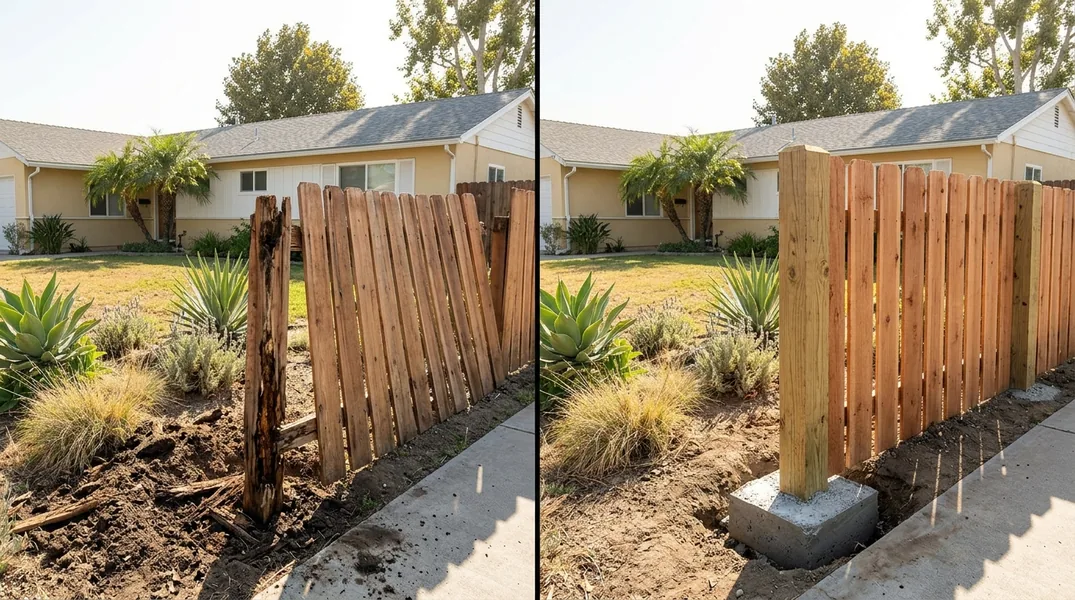
Why Your Anaheim Fence Is Leaning: The Common Culprits
A leaning fence is more than just an eyesore. It's a warning sign that something has compromised the structural integrity of your fence posts, and in Anaheim, there are several specific reasons why this happens. Unlike other regions, our local climate and soil conditions create a perfect storm for fence problems that homeowners need to understand.
The most common cause of leaning fences in our area is termite damage. Subterranean termites thrive in Southern California's warm climate and can silently hollow out wooden fence posts from the inside. A post that looks solid on the surface may have lost 30 to 50 percent of its interior structural capacity. As the post weakens, the weight of the fence panels and the pressure from wind causes the post to shift and lean. Many homeowners don't realize they have a termite problem until the fence has already begun to fail.
Another major culprit is sprinkler-related rot. If your irrigation system regularly sprays the base of your fence posts, the constant moisture creates ideal conditions for wood rot and decay. The wood becomes soft and spongy, losing its load-bearing capacity. Over time, the post settles unevenly or tilts as the rotted wood compresses under the weight of the fence.
Termite Damaged Fence Posts: Identification and Why It Matters
Identifying termite damage early can save you thousands in repair costs. A termite damaged fence post often shows subtle signs that homeowners miss until the problem is severe. Look for mud tubes running up the base of the post, which termites use as protected highways. You might also notice small holes or a hollow sound when you tap the post with a hammer. The wood may feel softer than it should, or the paint might be bubbling or peeling in unusual patterns.
The reason termite damage is so dangerous is that it progresses quietly and quickly. A colony can cause significant structural damage in just 12 to 18 months. Once a post is compromised, it can no longer safely support the fence. The post will lean, and adjacent posts may follow as the load shifts. If left unchecked, an entire fence section can collapse, creating a safety hazard and an expensive emergency repair situation. This is why regular inspections are critical, especially if you notice other signs of termite activity on your property.
If you suspect termite damage to your fence, the best course of action is to have a professional assess the situation. Anaheim Fence can inspect your posts and recommend whether repair or replacement is necessary. Call us at (657) 207-8168 to schedule a consultation.
Rotted Fence Post Repair: When You Need Professional Help
Rotted fence post repair is one of the most common services we provide to homeowners in our service area. Unlike termite damage, which happens inside the wood, rot is visible and often easy to diagnose. Soft, discolored wood at the base of a post, or wood that crumbles when you press on it, indicates active rot. The cause is usually moisture exposure, whether from sprinklers, poor drainage, ground contact, or simply years of rain and humidity.
The challenge with rotted posts is deciding whether to repair or replace. Small surface rot can sometimes be treated and stabilized, but deep structural rot typically requires post replacement. Attempting a DIY repair on a load-bearing fence post is risky and often leads to incomplete fixes that fail within a year or two. A professional inspection will determine the extent of the damage and recommend the most cost-effective solution. Sometimes replacing just the damaged post is the right answer. Other times, if multiple posts are affected, Wood & Privacy Fence Installation may be more economical than piecemeal repairs.
The repair process typically involves removing the damaged post, digging out the old post hole, treating the area for pests or moisture issues, and installing a new pressure-treated post set in concrete. This ensures the new post has a solid foundation and won't rot prematurely. We always use quality materials and proper installation techniques to prevent the same problem from recurring.
Hillside Clay and Soil Instability: A Hidden Fence Problem
Many properties in our region sit on or near hillside terrain with dense clay soil. This soil type creates unique challenges for fence stability that many homeowners don't anticipate. Clay soil is highly expansive, meaning it swells when wet and shrinks when dry. This constant movement puts pressure on fence posts, causing them to shift, settle unevenly, or lean over time. During rainy seasons, the soil expands and pushes against posts. During dry periods, it contracts, leaving gaps and allowing posts to move.
Additionally, clay soil drains poorly, which means water pools around the base of fence posts. This moisture accelerates wood rot and creates conditions where termites thrive. If your property is on a slope, gravity compounds the problem. Posts naturally want to lean downhill as the soil around them shifts and compresses. Homeowners with hillside properties often notice their fences leaning within just a few years of installation, even if the original installation was done correctly.
The solution for clay soil instability involves proper post installation technique. Posts must be set deeper than standard requirements, with concrete footings that extend below the active soil layer. Some properties benefit from soil stabilization or improved drainage around the fence line. If your fence is already leaning due to clay soil movement, professional fence post repair should address the root cause, not just straighten the fence temporarily. This might involve resetting posts at proper depth, installing additional bracing, or improving site drainage.
Fence Post Repair Solutions: What Works and What Doesn't
When it comes to fixing a leaning fence, there are several approaches, and not all of them work equally well. The cheapest option, simply pushing the post back upright and adding bracing, is usually a temporary fix. If the post is rotted or termite-damaged, bracing won't solve the underlying structural problem. The post will continue to weaken, and the fence will lean again within months. This is why a proper diagnosis is essential before any repair work begins.
The most reliable solution is fence post repair that addresses the root cause. If the post is rotted or termite-damaged, replacement is typically necessary. If the post is sound but the foundation is failing due to soil movement or poor initial installation, the post can sometimes be reset deeper with a new concrete footing. If multiple posts are affected or the fence is old, a full replacement may be more economical and reliable than attempting repairs.
Professional repair also includes preventive measures. We recommend treating posts with termite-resistant sealers, ensuring proper drainage away from the fence line, and in some cases, installing metal post caps or sleeves to prevent water penetration. These steps extend the life of your fence and prevent future leaning problems. When you're ready to address your fence issues, contact Anaheim Fence for a free estimate. We'll inspect your fence, identify the cause of the lean, and recommend the best repair or replacement solution for your property.
Fence Post Repair Cost in Anaheim: What to Budget
Understanding the pricing for fence post repair helps you make an informed decision. The cost varies significantly depending on the cause of the problem and the scope of work needed. A single post replacement typically costs between 300 and 600 dollars, including labor and materials. If multiple posts need replacement or if the repair involves addressing underlying soil or drainage issues, costs can range from 1,500 to 4,000 dollars or more.
Several factors influence the final cost. The type of fence material matters, as wood posts are less expensive to replace than vinyl or composite alternatives. The depth of the post hole and the quality of the concrete footing affect labor time. If termite treatment is necessary, that adds to the expense. The accessibility of the fence also plays a role, as tight spaces or hillside terrain require more time and care. Finally, if the underlying cause is soil instability or drainage problems, addressing those issues adds to the total cost but prevents future repairs.
Rather than guessing at costs, the best approach is to have a professional evaluate your fence. Anaheim Fence offers a free estimate that includes a thorough inspection and a detailed breakdown of recommended work and costs. Call us at (657) 207-8168 or visit our website to request your free estimate today. Knowing exactly what your fence needs allows you to budget properly and avoid costly emergency repairs down the road.
Looking for a professional fence contractor in Anaheim? Anaheim Fence responds fast for all your fence needs.
Get a Free Quote